The flute is one of the oldest man-made instruments. Archaeologists found a flute made from bone that dated to be 43,000 to 80,000 years old. The flute is part of the woodwind group. The one major difference between the flute and the other instruments in the woodwind family is that the flute does not use a reed to produce its sound, but rather the flow of air goes across a hole on the flute which creates air at the hole that is passes down the tubular shape and comes out the other side as sound. The in which a player changes the notes/sound is by opening and closing different holes in the body of the flute. By also changing the air pressure in the flute, a flute player can change the pitch of a note. A musician who plays the flute can be referred to as a flute player, a flautist, or a flutist.
|
||
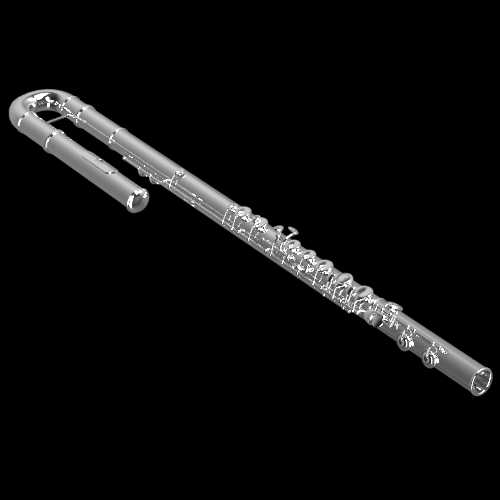
ALTO FLUTE: This type of flute has a history of over a hundred years old. The alto flute is a transposing instrument, meaning that music written for it is a pitch different than what it actually sounds. It is notated a 4th above its actual sound. 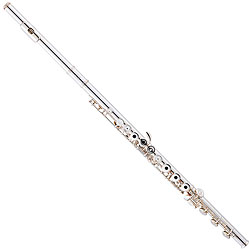 CONCERT FLUTE: This type of flutes is the general flute used, its pitch is in C and its range is over three octaves, starting from middle C. 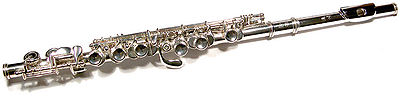 SOPRANO FLUTE: It has a range of three octaves, it is equivalent to a Concert C Flute, just in a different key. |
BASS FLUTE: It evolved during the 1920's as a substitute for the saxophone in jazz music. It is pitched one octave lower than the ordinary flute.
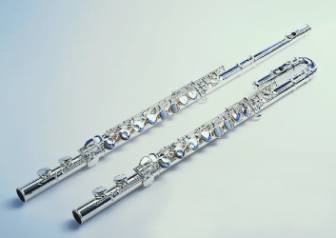
TENOR FLUTE: This type of flute has been in existence since medieval times. It is pitched one tone lower than the C flute.
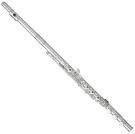 TREBLE FLUTE: The G Treble Flute is usually responsible for the melody. 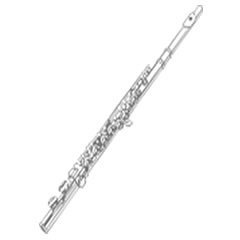 |
|
